
Surgical forceps are essential instruments used across surgery, dentistry, wound care and other healthcare settings. They help clinicians hold, manipulate, position or clamp tissue and other materials during a procedure. Although many forceps may look similar at first glance, their tip patterns, arm designs and locking mechanisms are made for different tasks.
The three broad groups covered in this guide are tissue forceps, dressing forceps and haemostatic forceps. Understanding the purpose of each group helps healthcare professionals, students, purchasing teams and distributors identify instruments that match the intended application.
What Are Surgical Forceps?
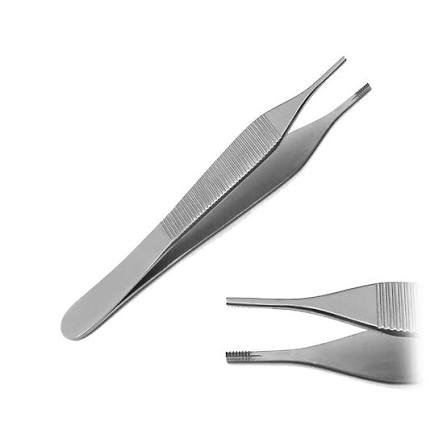
Surgical forceps generally consist of two arms joined at one end. In many spring-action patterns, squeezing the arms brings the tips together so an item or tissue can be held. Other designs include ring handles and a ratchet mechanism that allows the instrument to remain locked in a closed position.
Depending on their intended function, forceps may have fine teeth, smooth or lightly serrated tips, specially shaped jaws or a locking feature. Medical-grade stainless steel is widely used because it is strong, corrosion-resistant when properly maintained and suitable for validated cleaning and sterilisation processes.
Surgical forceps are used in a range of settings, including:
- General and specialist surgery
- Wound care and dressing procedures
- Dentistry and oral surgery
- Hospitals, clinics and healthcare facilities
- Laboratories and research environments
- Veterinary practice
Main Types of Surgical Forceps
For a useful first-level classification, surgical forceps can be grouped into tissue, dressing and haemostatic forceps. The main difference is the task each instrument is designed to perform.
1. Tissue Forceps
Tissue forceps are designed to grasp, hold and manipulate body tissue. Their tips are selected according to the tissue and the degree of grip required. Some patterns use multiple fine teeth to provide a secure hold, while others use atraumatic, smooth or lightly serrated tips for more delicate handling.
Common Tissue Forceps
Adson Tissue Forceps
Adson tissue forceps are compact instruments with short arms and a relatively broad gripping tip. They are commonly used where controlled handling of small areas of tissue is required, including delicate surgical work.
Adson-Brown Tissue Forceps
Adson-Brown tissue forceps feature multiple closely spaced teeth arranged across the gripping area. This pattern distributes the grasp across a wider area than a simple single-tooth arrangement and is commonly associated with plastic surgery and other procedures requiring controlled tissue handling.
DeBakey Tissue Forceps
DeBakey forceps have a distinctive atraumatic tooth pattern intended for delicate tissue handling. They are especially associated with cardiovascular and vascular procedures, where careful manipulation is important.
Russian Tissue Forceps
Russian tissue forceps have broad, rounded or oval-shaped tips with small teeth. Their wider contact area can assist with holding and manipulating tissue, depending on the procedure and tissue characteristics.
Toothed Tissue Forceps
Toothed tissue forceps use interlocking or mesh-like teeth to improve grip. They may be selected when a firmer hold is required, but the suitability of a toothed pattern depends on the tissue and the clinical task.
Common uses of tissue forceps include:
- Holding tissue during procedures
- Manipulating tissue during suturing
- Supporting tissue during dissection
- Positioning skin edges for suturing
- Controlled handling of tissue structures
2. Dressing Forceps
Dressing forceps are mainly used to handle gauze, cotton, dressings and other small materials. Their tips are commonly smooth or lightly serrated to help manage these materials without the more pronounced gripping teeth found on many tissue forceps.
They are available in different lengths, tip shapes and handle styles. The most suitable pattern depends on the access required and the task being performed.
Common Dressing Forceps
Plain Dressing Forceps
Plain dressing forceps have smooth tips and are commonly used to pick up and position gauze, cotton and dressings.
Serrated Dressing Forceps
Serrated dressing forceps have fine ridges on the gripping surfaces. These can improve control when handling slippery or delicate materials.
Bayonet Dressing Forceps
Bayonet dressing forceps have an offset or angled profile. This shape can help keep the user's hand away from the direct line of sight and may improve access in confined areas. Bayonet patterns are commonly associated with ENT procedures.
Common uses of dressing forceps include:
- Applying and removing dressings
- Handling sterile gauze and cotton
- Assisting with wound cleansing and preparation
- Moving small medical materials
- General clinical and surgical support
3. Haemostatic Forceps
Haemostatic forceps, also called haemostats or artery forceps, are locking instruments used to clamp vessels or other structures as part of surgical procedures. Unlike typical spring-action tissue and dressing forceps, most haemostatic patterns include a ratchet lock that holds the jaws closed without continuous pressure from the user's hand.
Haemostatic forceps may have straight or curved jaws. Their length, jaw profile and serration pattern vary by instrument type and intended use.
Common Haemostatic Forceps
Mosquito Haemostatic Forceps
Mosquito forceps are small, fine haemostatic instruments commonly used for clamping smaller vessels or structures. They are available in straight and curved patterns.
Kelly Haemostatic Forceps
Kelly forceps commonly have serrations along part of the jaw length and are used for clamping medium-sized vessels or tissue structures, as appropriate to the procedure.
Crile Haemostatic Forceps
Crile forceps generally feature full-length serrations along the gripping surface. They are used for clamping vessels and assisting with haemostasis during surgical procedures.
Kocher Forceps
Kocher forceps, also known as Ochsner forceps, have teeth at the tips to provide a secure grip. They are commonly used for grasping firmer tissue or structures where that toothed pattern is appropriate.
Pean Haemostatic Forceps
Pean forceps typically feature broad, serrated jaws and a locking mechanism. They are used for clamping in appropriate surgical applications.
Common uses of haemostatic forceps include:
- Clamping blood vessels during surgery
- Temporary control of blood flow as part of a procedure
- Clamping selected tissue or materials
- Supporting surgical dissection
- Controlled clamping where a locking instrument is required
Tissue vs Dressing vs Haemostatic Forceps
Although these instruments all help clinicians hold or control something during a procedure, their designs and primary purposes are different.
| Feature | Tissue Forceps | Dressing Forceps | Haemostatic Forceps |
|---|---|---|---|
| Main purpose | Tissue handling and manipulation | Handling gauze, cotton and dressings | Clamping vessels or structures |
| Tip design | Teeth, atraumatic or serrated tips | Usually smooth or lightly serrated | Usually serrated; some patterns have teeth |
| Locking function | Usually non-locking | Usually non-locking | Commonly ratchet locking |
| Typical handle design | Spring-action arms | Spring-action arms | Often ring handles with a ratchet |
| Typical application | Tissue management | Wound care and material handling | Haemostasis and controlled clamping |
How to Select the Appropriate Surgical Forceps
Choosing suitable surgical forceps depends on the procedure, tissue type, required grip, access and working environment. Buyers and clinical teams should review the following factors before selecting a pattern.
Application
First identify whether the instrument is needed for tissue handling, dressing management or clamping. These tasks call for different jaw designs and mechanisms.
Tip Style
Tip design strongly influences grip. Teeth can provide a firmer hold, while smooth, serrated or atraumatic patterns may be more appropriate for handling dressings or delicate structures. The correct choice depends on the application.
Length and Access
Forceps are produced in different lengths. Consider the working depth, access required, hand position and procedure type when comparing dimensions.
Material and Finish
Medical-grade stainless steel is commonly used for reusable surgical forceps. Review the specified steel grade, corrosion resistance, surface finish and manufacturing quality. Satin, matt and polished finishes may be available depending on the product specification.
Locking Mechanism
For haemostatic forceps, check that the ratchet engages and releases smoothly and that the jaws align correctly when closed. The lock should function consistently throughout its intended use.
Manufacturing Quality
Inspect the tip alignment, jaw connection, arm movement, surface condition and consistency between instruments. Buyers should also request relevant product specifications and quality or certification information from the supplier.
Materials Used in Surgical Forceps
Stainless Steel
Medical-grade stainless steel is widely used because it offers strength and corrosion resistance when the instrument is properly cleaned, processed and maintained. The precise grade should be confirmed from the manufacturer's specification.
Surface Texture
Common surface finishes include satin, matt and polished options. Finish can affect reflectivity, appearance and ease of visual inspection. Selection should be based on product requirements and the intended environment.
Manufacturing and Functionality
Reliable manufacturing involves accurately formed tips, properly aligned arms, secure joints and smooth operation. For locking patterns, the ratchet and jaw closure should also be checked.
Care and Maintenance of Surgical Forceps
Reusable surgical forceps require appropriate cleaning, inspection, sterilisation and storage. Always follow the instrument manufacturer's instructions and the healthcare facility's validated reprocessing procedures.
- Follow the manufacturer's approved cleaning and sterilisation instructions.
- Remove visible soil and organic material promptly, following the validated cleaning process.
- Inspect tips and gripping surfaces for wear, damage or misalignment.
- Check arm movement, joints and locking mechanisms for correct function.
- Look for corrosion, cracks, loose connections or other signs of deterioration.
- Dry instruments as directed after cleaning and before storage.
- Store clean, processed instruments in suitable conditions that protect them from damage and contamination.
Frequently Asked Questions About Surgical Forceps
1. What are the common types of surgical forceps?
The main groups are tissue forceps, dressing forceps and haemostatic forceps. They are designed for tissue management, handling dressings and clamping vessels or structures, respectively.
2. What is the function of tissue forceps?
Tissue forceps are used to hold, position and manipulate tissue. Their tips may be toothed, serrated or designed for more atraumatic handling.
3. How do tissue forceps differ from dressing forceps?
Tissue forceps are designed for grasping and manipulating tissue, while dressing forceps are mainly used to handle gauze, cotton and dressings. Their tip designs reflect these different tasks.
4. What are haemostatic forceps used for?
Haemostatic forceps are locking instruments used to clamp vessels or other structures during appropriate surgical procedures.
5. What is the difference between Kelly and Crile forceps?
Kelly forceps commonly have serrations along part of the jaw, whereas Crile forceps generally have serrations along the full length of the gripping surface. Confirm the exact pattern against the instrument specification.
6. Are surgical forceps made from stainless steel?
Many reusable surgical forceps are manufactured from medical-grade stainless steel. The exact material grade and finish should be confirmed with the supplier.
7. Can one type of forceps be used for every surgical procedure?
No. Different procedures require different tip styles, lengths, grip characteristics and mechanisms. Instrument selection should match the intended application and clinical protocol.
8. What should buyers consider when sourcing surgical forceps?
Review the material specification, dimensions, tip design, finish, jaw alignment, functionality, manufacturing consistency and relevant quality documentation. Supplier capability and support for bulk or OEM requirements may also matter.
Conclusion
Surgical forceps are available in many designs to support different clinical tasks. Tissue forceps help hold and manipulate tissue, dressing forceps assist with gauze and wound-care materials, and haemostatic forceps provide a locking mechanism for controlled clamping.
Understanding the differences in tip design, length, material, finish and locking function can help healthcare professionals, students, purchasing teams and distributors identify the right instrument for a specific requirement. Product specifications and approved clinical guidance should always be checked before use.
Explore Surgical Instruments from Iron Art
Iron Art supports B2B enquiries for surgical and medical instruments, including wholesale supply, OEM projects and private-label requirements. Contact our team to discuss product specifications, quantities, branding and packaging needs.
Website: surgical-products.com
Email: info@surgical-products.com
Phone: +92 346 8501100