Direct manufacturer   ·   OEM • Private Label • Custom Design   ·   B2B supply for dental instruments
Dental Instrument · Periodontal Probes

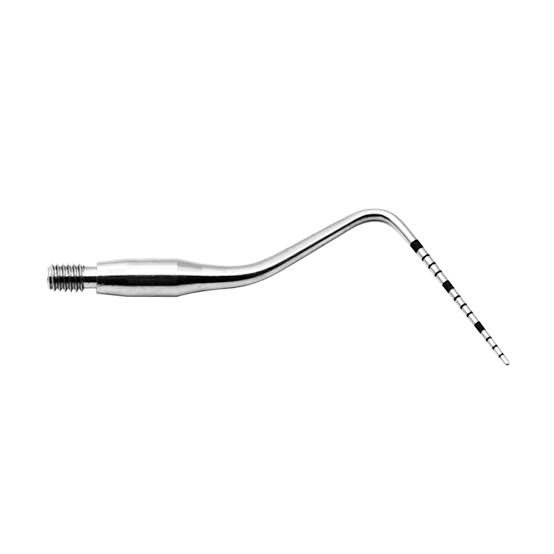
Periodontal Probe

Calibrated probes for pocket depth measurement, charting and furcation examination, made in Williams, UNC-15, WHO, CP-series and Nabers patterns. Iron Art supplies distributors, importers and private-label buyers, with markings, tip form, handle, finish and packaging agreed against your own drawing or reference sample.

B2B · OEM · PRIVATE LABEL · BULK DENTAL INSTRUMENTS

CalibratedMillimeter markings and color bands, set by pattern
Williams to NabersCharting, screening and furcation patterns
Ball or Tapered TipsWHO ball tip, tapered UNC-15, flat Goldman-Fox
OEM ReadyPrivate-label marking and packaging by program
Product overview

Periodontal probes: how the marking patterns differ and how to specify them.

A periodontal probe is a calibrated hand instrument placed gently in the gingival sulcus to measure pocket depth. The readings feed periodontal charting of pocket depth and attachment loss, and some patterns are used to check bleeding on probing and furcation involvement.

The patterns differ mainly in their marking sequence and tip. A Williams probe is marked at 1, 2, 3, 5, 7, 8, 9 and 10 mm, with no marking at 4 or 6 mm. A UNC-15 probe is 15 mm long, marked at every millimeter, with color bands at 4 to 5, 9 to 10 and 14 to 15 mm. A WHO probe has a 0.5 mm ball tip and a band from 3.5 to 5.5 mm.

The markings must match the protocol your customers chart to, so we work from your drawing, sample or reference probe rather than the pattern name alone. See also our Gracey curettes and the wider range of dental instruments.

Marking sequenceSet by pattern: Williams, UNC-15, WHO and CP-series all read differently.
Tip formTapered, flattened or 0.5 mm ball, depending on the pattern.
Screening probesWHO and CPITN probes with a colored band for quick reading.
Furcation probesCurved Nabers probes, usually double-ended with mirror-image ends.

Technical Specification

Confirmed against your approved drawing or sample before production.

ProductPeriodontal probe
Also listed asPeriodontal pocket probe, dental periodontal probe, periodontal measuring probe
Instrument typeManual dental diagnostic hand instrument
Pattern familiesWilliams, Goldman-Fox/Williams, UNC-15, WHO / CPITN, CP-series (CP-11, CP-12, CP-15) and Nabers
MarkingsPer pattern, for example Williams 1, 2, 3, 5, 7, 8, 9, 10 mm; UNC-15 1 to 15 mm; WHO 3.5, 5.5, 8.5, 11.5 mm; confirmed from drawing
Tip formTapered, flattened or 0.5 mm ball, per pattern
Marking methodEtched, laser-marked or color-coded, confirmed per approved design
ConfigurationSingle-ended or double-ended, per approved design
MaterialStainless steel; grade confirmed in the agreed specification
Overall lengthConfirmed from your reference
Tip diameterConfirmed from drawing or sample before production
HandleDiameter, profile and grip style per approved specification
FinishTo be agreed, for example satin or polished
Packaging and markingBulk, standard or buyer-branded; logo or reference marking by agreement
Marking positions, tip diameter and handle details differ between makers, so a single figure would mislead. Send a drawing or reference probe and the dimensions are confirmed in writing before production.
Pattern guide

Periodontal probe patterns and their markings.

These are the markings commonly used across dental catalogs. They describe how the patterns are organized, not clinical guidance, and the exact positions are confirmed against your drawing or sample.

Reading a probe listing

  • Check the marking sequence in millimeters, not just the pattern name
  • Check where any color bands sit
  • Check the tip form: tapered, flat or ball
  • Check whether it is single or double-ended
  • Request a drawing or photograph of the exact piece
Two probes sold under the same pattern name can differ in tip diameter and band positions. If you already use a reference probe, send it or a photograph and we match the markings before quoting.

Patterns, markings and typical use

PatternMarkings and tipTypical use
Williams1, 2, 3, 5, 7, 8, 9, 10 mm; no marking at 4 or 6 mmTraditional charting
Goldman-Fox/WilliamsWilliams markings on a flattened tipCharting with a flat tip
UNC-15Every 1 mm to 15 mm, color bands at 4 to 5, 9 to 10 and 14 to 15 mmFull-mouth charting and research
WHO / CPITN0.5 mm ball tip, band at 3.5 to 5.5 mm; clinical version also marked at 8.5 and 11.5 mmScreening, such as BPE or CPI
CP-seriesColor-coded bands on CP-11, CP-12 and CP-15; tip thickness and band positions vary by patternCharting
NabersCurved, usually double-ended, markings at 3 mm intervalsFurcation involvement on molars
Availability of each pattern and its exact markings are confirmed against your drawing or sample.
Pattern use

Which probe for which task.

The final choice is a clinical decision. This is how catalogs usually match the patterns to tasks.

CHARTING

UNC-15 or Williams

Probes that read in millimeters are used for full charting, where each site is recorded as a number. UNC-15 reads every millimeter; Williams skips 4 and 6 mm.

SCREENING

WHO or CPITN ball tip

A 0.5 mm ball tip and a colored band show quickly whether a reading falls within a threshold range, which suits screening such as BPE or CPI.

FURCATION

Nabers probe

A curved working end reaches into the furcation of a molar. Nabers probes are normally double-ended, with mirror-image ends for the two sides.

Instrument comparison

Periodontal probe or dental explorer?

The two are often listed together but do different jobs. The difference is the tip and whether the instrument is calibrated.

PointPeriodontal probeDental explorer
TipBlunt, rounded or ball tip made for the sulcusFine, pointed tip for tactile detection
MarkingsMillimeter markings or color bandsNone
Main taskMeasuring pocket depth and chartingDetecting calculus, caries and surface irregularities
Quote byPattern, marking sequence, tip form and diameterPattern, tip shape and length

Dimensions and geometry vary by maker. Use your approved drawing, sample or specification as the final reference.

Manufacturer & supply

Periodontal probe manufacturer for B2B buyers.

Iron Art makes and supplies dental and surgical instruments for buyers who want a defined specification, a sample to approve and repeatable supply. See our OEM and private-label services for how programs are set up.

Our process

From reference sample to approved production.

Send the pattern list, a drawing or a reference probe, and the quantities you expect to order. We review it against your requirements, confirm markings, dimensions, finish and packaging, and agree a sample before production begins.

  • Single patterns and complete sets
  • OEM manufacturing to your drawing
  • Private-label marking and packaging
  • Wholesale and bulk quantities for distributors
What to send

Details that make a quotation accurate.

A clear inquiry avoids assumptions. A photograph, drawing or your current probe is the fastest reference.

  • Pattern, and the marking sequence and color bands
  • Tip form and diameter; single or double-ended
  • Overall length and handle profile
  • Material and finish
  • Quantity, packaging and marking
B2B workflow

Specification, sample, approval, repeat supply.

A straightforward route for buyers sourcing periodontal probes in volume.

SPECIFY

Send your brief

Pattern and markings, drawing or reference probe, quantities, finish and packaging.

QUOTE

Review and quotation

Specification confirmed in writing, with any OEM or marking options priced.

APPROVE

Sample

Inspect a sample against your reference before production is released.

SUPPLY

Repeat orders

Reorders follow the approved specification, including private-label packs.

Buyer FAQ

Periodontal probes: questions buyers ask.

Short answers on patterns, markings and supply.

What is a periodontal probe?

A periodontal probe is a calibrated hand instrument that is gently placed in the gingival sulcus to measure pocket depth. The readings are used to chart pocket depth and attachment loss, and some patterns are also used to check for bleeding on probing and furcation involvement.

How do Williams and UNC-15 probes differ?

The difference is the marking sequence. A Williams probe is marked at 1, 2, 3, 5, 7, 8, 9 and 10 mm, with no marking at 4 or 6 mm. A UNC-15 probe is 15 mm long and marked at every millimeter, with color bands at 4 to 5, 9 to 10 and 14 to 15 mm.

What is a WHO (CPITN) periodontal probe?

A WHO probe has a 0.5 mm ball tip and a black band between 3.5 and 5.5 mm. The clinical (CPITN-C) version also has markings at 8.5 and 11.5 mm, while the epidemiological (CPITN-E) version is marked at 3.5 and 5.5 mm. It is used for screening, such as BPE or CPI, rather than detailed charting.

What is a Nabers probe used for?

A Nabers probe is a curved furcation probe used to detect and measure furcation involvement on molars. It is usually double-ended with mirror-image working ends and markings at 3 mm intervals.

What are the CP-11, CP-12 and CP-15 probes?

They are color-coded periodontal probe patterns with banded markings. Tip thickness and the positions of the bands differ between patterns and between makers, so confirm the marking positions against your drawing or reference piece.

Which probe is used for charting and which for screening?

UNC-15 and Williams probes are commonly used for full charting because they read in millimeters. WHO or CPITN ball-tip probes are used for screening, where the colored band shows whether a reading is within a threshold range.

What should I confirm about the markings when ordering?

Confirm the marking sequence in millimeters, the position of any color bands, the tip form (tapered, flat or ball), the tip diameter and how the markings are applied. Send a drawing, photograph or your current probe so the markings can be matched exactly.

What material is used, and are periodontal probes reusable?

Stainless steel is the standard option, with the exact grade and finish confirmed in the agreed specification. Periodontal probes are generally reusable hand instruments, and cleaning and sterilization follow the buyer's own validated routine.

Do you supply OEM, private-label and bulk periodontal probes?

Yes. Logo marking, reference numbers and packaging can be agreed for private-label programs, and OEM work follows your drawing or approved sample. Quantities are discussed per program.

What should I include in a quotation request?

Include the probe pattern, the marking sequence and color bands, the tip form and diameter, single or double-ended, overall length, handle, material and finish, quantity, packaging and marking. A photograph or your current probe will speed up the quotation.

Need a quotation for periodontal probes?

Send the patterns and markings you need, quantities and packaging requirements. A drawing, photograph or reference probe will speed things up.

Request Quote →