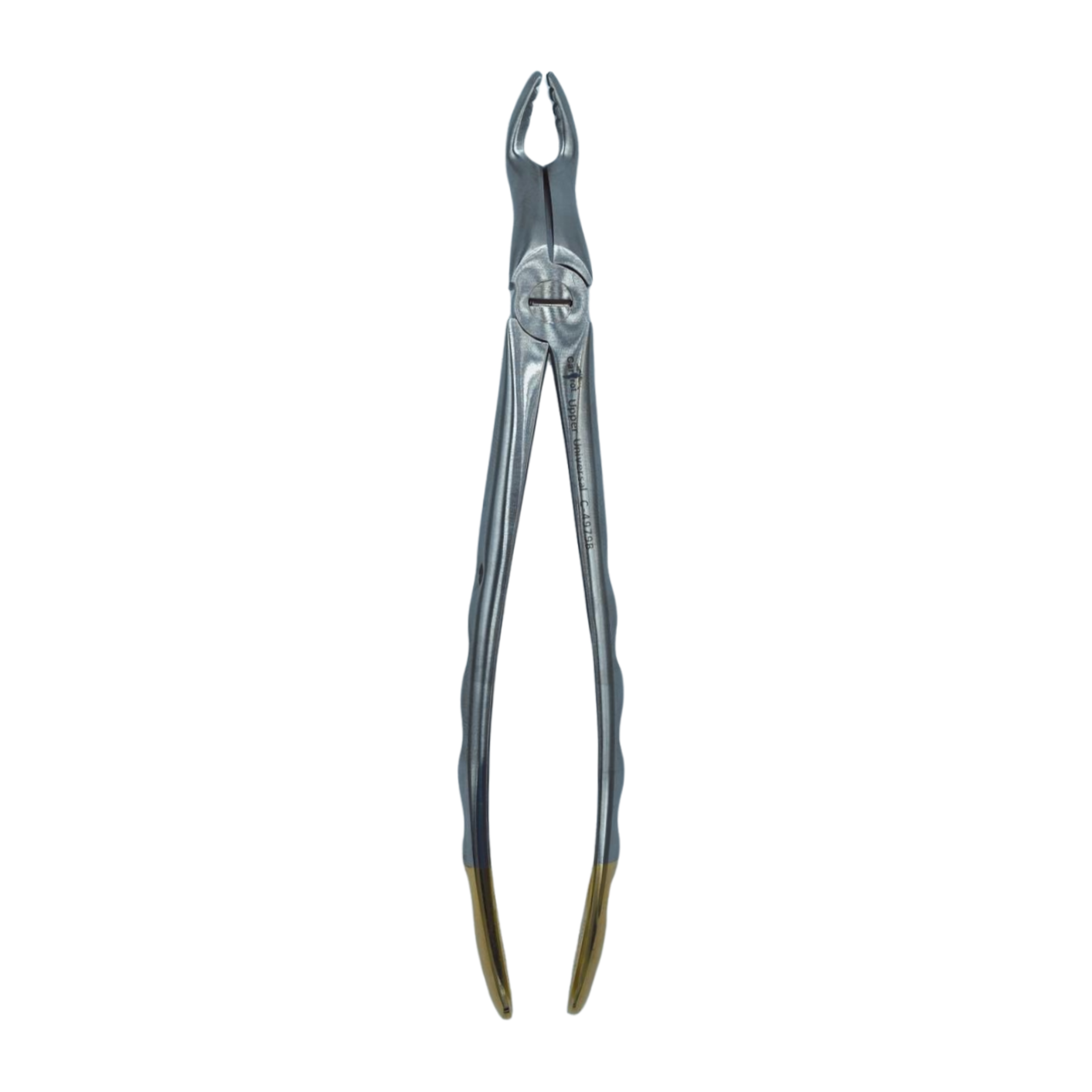
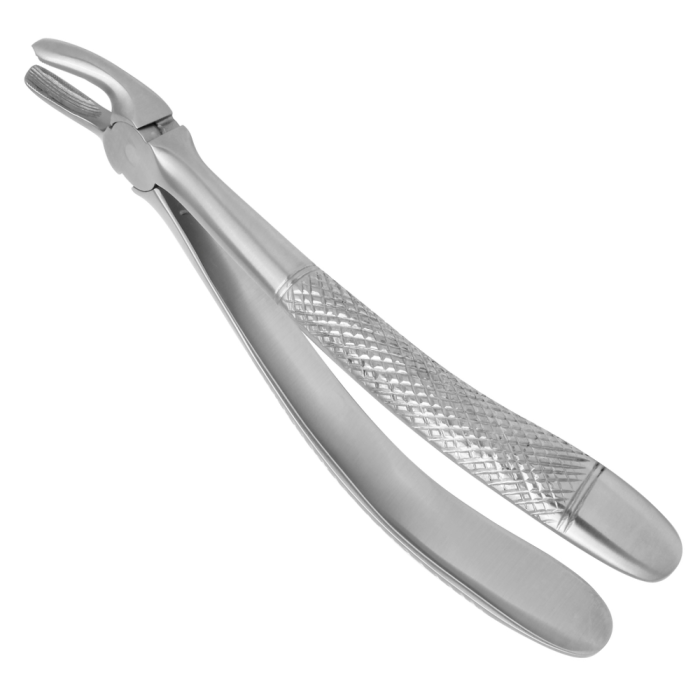
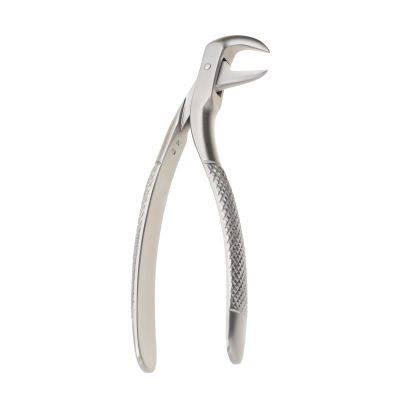
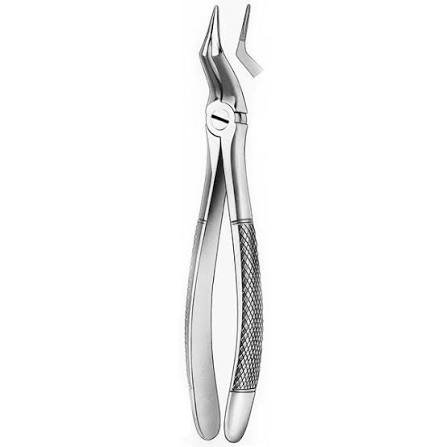
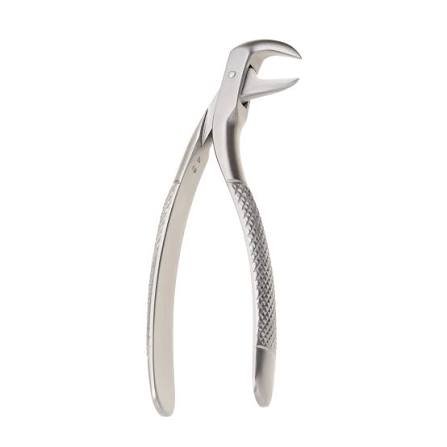
What are universal dental extraction forceps?
They are extraction forceps whose beak and handle form is meant to serve several teeth, typically incisors, canines and premolars, so one instrument covers common extractions. They are made in an upper form and a lower form.
What is the difference between upper and lower universal forceps?
Each is shaped for its own jaw. In American pattern catalogues the upper universal is commonly #150 and the lower universal #151. They are listed as separate items and are not interchangeable.
Can one universal forceps be used for every tooth?
No. Universal patterns suit the front and side teeth. Molars have their own forceps, such as upper molar and lower molar patterns, and retained roots use narrow-beak root forceps.
What is the difference between American and English pattern forceps?
They are two catalogue systems with different numbering and slightly different handle and beak forms. The same tooth group can carry a different number in each, so match by drawing or reference piece when comparing suppliers.
What material and finish are used?
Stainless steel is the standard option. The exact grade and surface finish, for example satin or polished, are confirmed in the specification you approve.
Are they reusable?
Stainless steel extraction forceps are generally intended for repeated use. Cleaning and sterilisation follow the buyer's own validated reprocessing routine.
Can you make them to my drawing or sample?
Yes. Send a drawing, photograph or reference piece. Length, beak width, beak surface and finish are confirmed in writing before production.
Do you supply bulk, OEM and private-label orders?
Yes. Marking, reference numbers and packaging can be agreed per programme, and quantities are discussed per order.
Can they be supplied as part of a set?
Yes. Both universal forceps are the base of most extraction sets. See the adult extraction forceps set; the pattern list is agreed with you.
What should I include in a quotation request?
List upper, lower or both, the pattern number and system, beak surface, length and beak width, material and finish, quantity, packaging and marking. A photograph or the forceps you use now speeds things up.